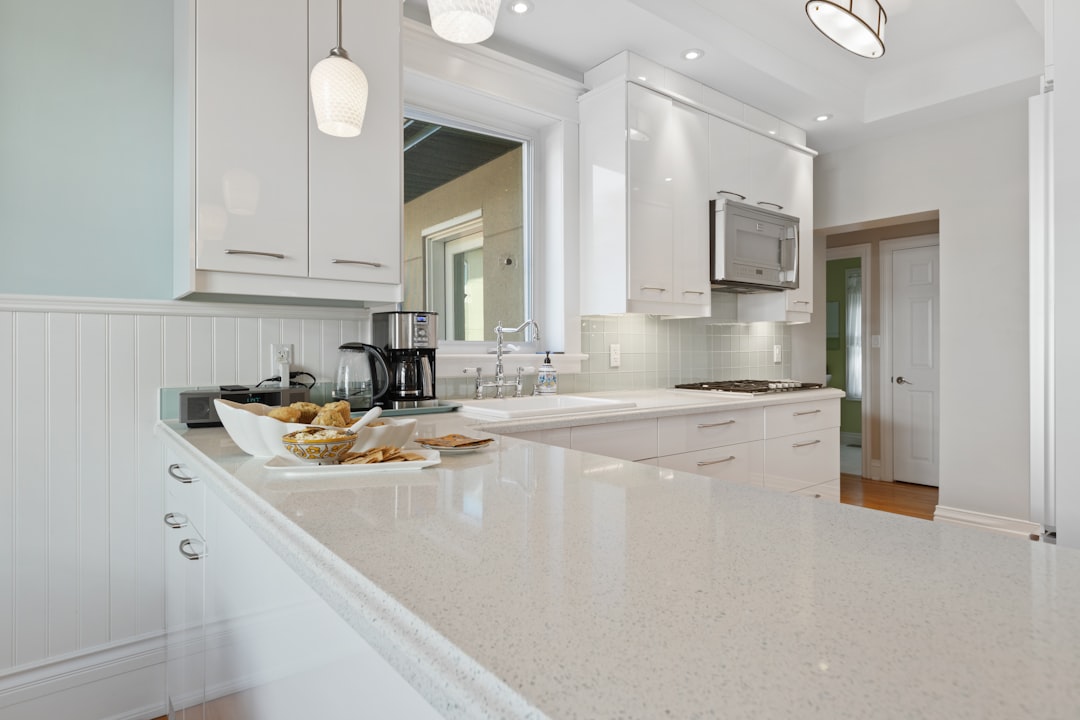
A countertop quote looks simple from the outside. Square footage times a price, plus install. Then you collect a second bid on the same kitchen and it comes back two thousand dollars apart, and the simple math stops making sense. The gap is almost never the stone itself. It is everything the two shops did or did not write down.
We have templated kitchens from West Asheville up through Weaverville and out toward Fletcher, and homeowners regularly hand us competitor bids that are missing half the job. What follows is a walk through what actually sits inside a countertop estimate in this market, so the next one you receive is easier to read.
The Line Items That Belong in Every Estimate
A complete quote accounts for material, fabrication, and installation as separate ideas, even when they land on a single line. Material is the slab, priced by the square foot and by grade. Fabrication is the cutting, the edge work, and the polishing. Installation covers the crew, the transport, and the set.
Here is the shape of a typical kitchen in this area at roughly 45 square feet:
| Line item | What it covers | Commonly left off |
|---|---|---|
| Slab material | Stone by grade and square foot | Waste factor on veined slabs |
| Fabrication | Cutting, edge work, polishing | A second cutout for a prep sink |
| Templating | Digital or manual measure | The return trip after cabinet changes |
| Sink cutout | Undermount shaping and polish | Faucet, air switch, and soap holes |
| Edge profile | A standard eased edge | Anything beyond that standard |
| Tear out | Removing the old counter | Haul away and disposal |
| Plumbing | Disconnecting the sink and faucet | Reconnect, often a separate trade |
| Sealing | First application on natural stone | Nothing, this should be included |
When one bid comes in a thousand dollars under another, the difference usually lives in that right hand column. Tear out and haul away is the most common omission. Plumbing reconnect is the second.
Fabrication In House Versus Brokered Out
This is the single biggest split among Asheville countertop companies, and it is rarely stated anywhere on the estimate. Some shops own a saw, a CNC, and a polisher. Others take your measurements, send the job to a regional fabricator, and manage the schedule on your behalf.
Neither model is automatically wrong. A broker can sometimes beat an in house price on common material because they buy in volume. What changes is control. When a slab cracks on the saw, an in house shop knows that afternoon and can start sourcing a replacement before you have even heard about it. A brokered job surfaces the same problem days later, and your install date moves.
So ask it directly: who cuts my stone, and where does that happen. If the answer is vague, that tells you something useful about how a real problem will be handled.
Why Two Bids on the Same Kitchen Differ
Four things account for most of the spread.
Waste factor. A slab is a rectangle and a kitchen is not. A heavily veined quartzite that has to be matched across a seam can waste a third of the material. A shop quoting finished square footage without accounting for waste is either absorbing that cost or planning to call you about it later.
Grade of the same stone. Two companies both quoting granite are not necessarily quoting the same granite. Grade drives price far more than the trade name does. Ask which specific lot the price is built on, then go to the yard and look at it.
Edge profile. A standard eased edge is normally included. Ogee, dupont, and mitered aprons are not, and a mitered edge on a waterfall island adds real fabrication hours.
Sink type. An undermount sink needs its cutout shaped and polished, because the stone edge stays visible. A drop in sink hides its own cut. The labor is not the same, so the price should not be either.
Lead Times in Western North Carolina
Most estimates here run two to four weeks from template to install when the material is already sitting in a local yard. Special order stone adds time, and anything shipped in adds more.
Two local realities stretch that further. Winter weather closes mountain roads often enough to matter, and a truck coming over the ridge from a distributor does not always arrive when the schedule says it will. And remodel season in this region is compressed. Between late spring and early fall, half of Arden, Fairview, and Biltmore Village decides to redo the kitchen at the same time, and every shop in the county is carrying a queue.
If you have a firm deadline, say so before you sign anything, and get the install window written into the contract.
Templating and Who Pays for a Bad Measure
Templating is where the job is genuinely decided. In an older home, and this area has a great many of them, walls are not square and floors are not level. A template that records the ideal kitchen instead of the actual one produces a slab that will not sit right no matter how good the stone is.
The question worth asking is what happens when a template is wrong. A shop that stands behind its own measure recuts at its own expense. A shop that treats a bad template as the homeowner’s problem tends to mention that only after the slab is already cut. Get that answer before the deposit rather than after.
There is also a sequencing trap that catches people. Templating happens after cabinets are installed and leveled, never before. If a company offers to template around cabinets that are not finished, the number it produces is an estimate dressed up as a measurement.
Edge Profiles and the Small Line Items
Small charges accumulate faster than most homeowners expect. Every additional hole, whether for a faucet, a soap dispenser, an air switch, or a filtered water tap, is usually priced on its own. A cooktop cutout prices separately from a sink cutout. A backsplash in matching material prices by the linear foot.
None of that is unreasonable. It just needs to be visible. If a quote arrives as one number for the whole kitchen with no breakdown behind it, ask for the breakdown. Any shop fabricating its own work can produce one in a few minutes, because it already exists internally.
What Happens After the Truck Leaves
Warranty language separates serious shops from the rest, and there are two different warranties in play that often get conflated.
The material warranty comes from the manufacturer. On engineered quartz that frequently runs ten years or longer, and it covers defects in the product. The workmanship warranty comes from the fabricator, and it covers seams that open, chips along a finished edge, and a top that was not set level. Manufacturer coverage will not help you with a bad seam.
Ask how many years the workmanship warranty runs and what voids it. Ask who you actually call. On natural stone, ask when the seal needs reapplying and whether the first reseal is included in the price. Our granite countertops page covers how sealing schedules work by stone type, which varies more than most people assume. If you are comparing surfaces generally, the quartz countertops page sets out where engineered stone behaves differently.
Ten Questions Worth Asking Before You Sign
Take this list to every estimate you collect:
- Who fabricates the stone, and where is that shop
- Is tear out and haul away included, and does it cover the old backsplash
- Who disconnects the plumbing, and who reconnects it
- What waste factor is built into this square footage
- Which specific slab lot is this price based on
- What edge profile is included, and what does an upgrade cost
- Is the first seal included on natural stone
- How many years does the workmanship warranty run, and what voids it
- If the template is wrong, who pays for the recut
- What is the install window, and what happens if it slips
A shop that answers all ten without hedging is a shop that has done this often enough to know the answers cold. That experience is most of what you are actually buying.
Reading the Bid You Already Have
If estimates are sitting on your counter right now, line them up and mark which of those ten questions each one answers on paper. The cheapest bid is frequently the one answering the fewest, because the missing answers are the missing costs. The most expensive is not automatically the most complete, either. Some shops simply carry higher overhead.
Price the kitchen, not the square foot. Two numbers that look far apart often converge once both quotes describe the same scope of work, and every so often the higher one turns out to be the cheaper job.
When you are ready for a measure, contact us or call Firethegrid at (828) 210-4203. We fabricate in house, we template after your cabinets are set and leveled, and every estimate we hand over is itemized line by line.
Need help in Asheville?
Call (828) 210-4203